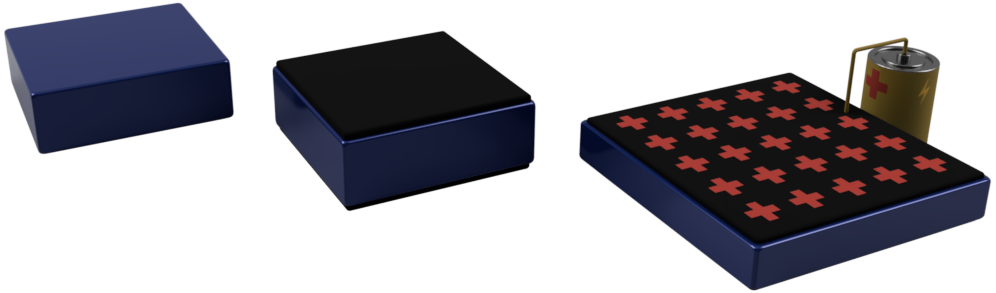
Skip to content

Soft Electric Linear Actuators

SELA drives offer unique motion features in a simple and compact package

1 Compliant

Smooth motion adapting to external forces

2 Energy Efficiency

Lower energy use than other actuators - almost none for static holding

3 Simplicity

Deformation drive - no gears, valves, gaskets, rods

4 Energy Density

Higher energy density than servos - scales to much smaller sizes

5 Noiseless

Absolutely no sound emerges from the drive

SELA motion

Reliable Compliance for Unpredictable Loads

A New Class of Actuation for Modern Products

From smoother interaction to simpler mechanisms, soft actuation will reshape motion technology

  • Soft actuation introduces motion that adapts naturally to real‑world forces, offering smooth, compliant behavior without demanding precise alignment.
  • And as actuators scale down, their high energy density enables compact mechanisms that achieve motions difficult or impossible with traditional drives.
  • SELA efficiency supports long‑duration, battery‑powered systems and autonomy‑focused designs. Remarkably, SELA use almost no power in static holding!
  • Silent operation and inherent functional safety make it suitable for devices that interact closely with people, delicate materials, or sensitive environments.
  • Because the technology is fully electric and low in mechanical complexity, it removes the need for pumps, gears, and other components that add noise, contamination, or maintenance. 

Key unique advantages:

  • Lightweight and compact with high energy density, especially in smaller sizes
  • Smooth motion with inherent force compliance
  • High dynamic efficiency, extremely low power use in static holding
  • Simple and noise-free; no gears, bearings, or moving parts
  • Safe, forgiving motion under imperfect or shifting loads
  • Fully electric and fast response compared to other soft actuators

How does it work?

Soft capacitor with stretchable insulator and electrode layers

p_how_it_works

Dielectric elastomer

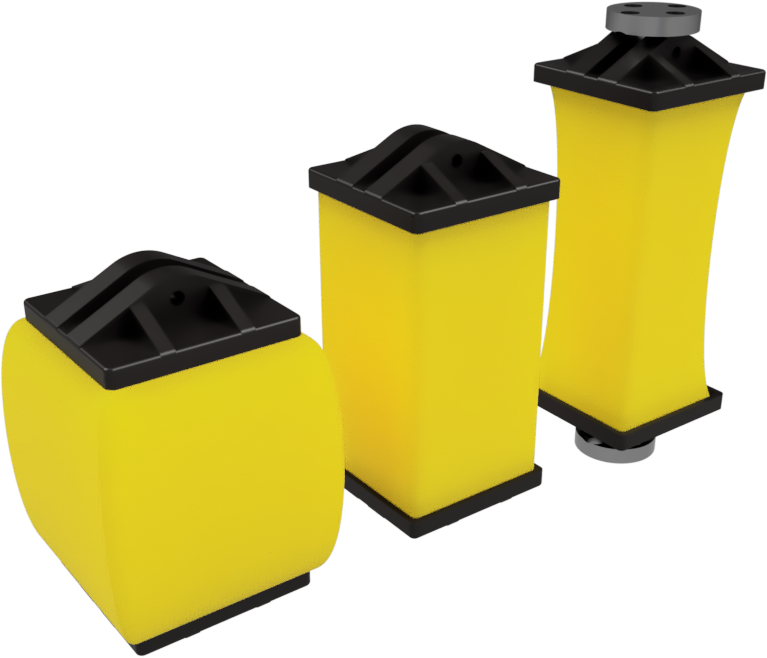
A thin and soft rubber-like material with high stretchability and high electrical insulation forms the bulk of the actuator
Soft electrodes

Special electrode materials combine high conductivity with ability to stretch under internal or external loads

Voltage control

Applied voltage create charges that generate electrostatic compressive force, which causes the actuator to become thinner and to expand in-plane

Soft capacitor = electrostatic charge-storage device

Direct voltage control 

The actuation principle is simple and straight-forward. When a soft capacitor is charged, the resulting charges cause electrostatic pressure on the dielectric material. If both dielectric and electrode materials are soft enough, high actuation strain well beyond 10% becomes possible. This actuator device is commonly known as Dielectric Elastomer Actuator (DEA), and we named it "SELA".

Typical voltage levels

At the current stage of development, the voltage levels are at several kilovolts. Our developments push towards lowering the activation voltage below 3000V by 2027, and below 1000V before 2029.

High voltage transistors and DC-DC step-up transformers are available from many vendors, enabling Proof-of-Concept projects now!

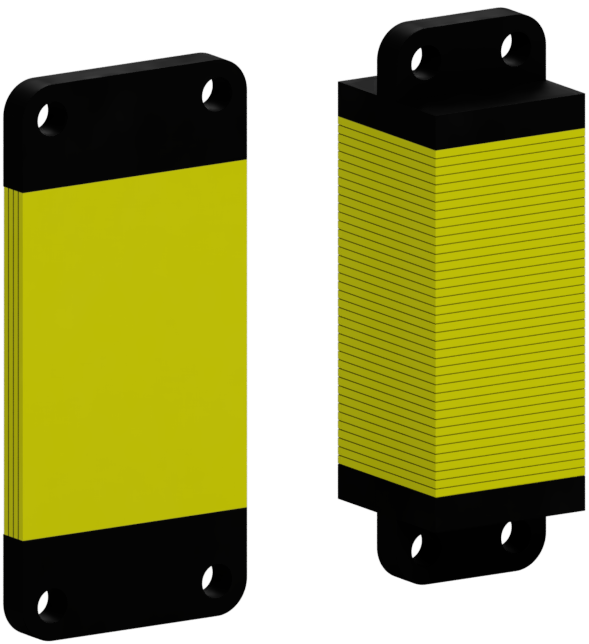
SELA-lowprofile+stack

Features

Discover more of the unique capabilities that SELA has to offer

Compliant spring

Compliance

SELA deforms elastically in response to voltage, for smooth, natural motion and high tolerance to misalignment or offaxis forces.

Smooth motion

Smooth Motion

The actuation is based entirely on material deformation, without use of gears or other friction pairs, the motion becomes inherently smooth and free of vibration or chatter.

Efficiency

Energy Efficient

SELAs deform electrostatically - charges are accumulated in the soft capacitor until the force or motion is achieved, after which no further charging is needed to hold. Static holding or gripping becomes effectively “free of energy cost.”

High energy density

High energy density

SELA have relatively high energy density >3 kJ/m3, which is higher than servos. In future, energy density will increase more than 10x.

Low weight

Low weight

SELA is mostly polymer, with low weight overall. This allows for faster-moving mechanisms and lower system weight.

No noise

Noiseless

SELAs produce no gear noise, no servo whine, no pneumatics hiss, and no hydraulic hum.

Clean

No contamination risks

No fluids or lubricants, gaskets or seals, air compressors, pumps, or valves, removing contamination and maintenance issues.

Functional Safety

Safety Among People

Compliant deformation provides back-driveability, which makes SELA functionally safe for interaction with people, delicate materials, and unpredictable loads.

Scalability

Full Scalability

SELA is highly scalable and can be made thin, wrapped, stacked, patterned, or laminated— enabling shapes and integrations not possible with classic drives.

Simplicity

Zero Complexity

SELA systems consist of one deformation part, no more. This reduces complexity dramatically, and helps raise system reliability.

Temperature

No heating up

Unlike servos, SELA drives don't heat up. This is due to the high efficiency and vanishing current draw in static holding phases.

Speed

Fast Response

The reaction time is low. Force build-up is extremely fast, and motion takes place in less than 100 ms, depending upon external loads.

Specifications + Road Map 

Preliminary specifications and future directions

These specifications are subject to rapid change and updates - we include our development road map for clarity. Proof-of-concept projects and demonstration work in general is possible at the voltage levels available today.

Metric Current 2027 2029
Strain 10% > 20% > 25%
Stress > 40kPa > 100 kPa > 200 kPa
Voltage < 5000 V < 3000 V < 1000 V
Speed < 200 ms < 100 ms < 100 ms

*Biological muscle generally achieves 20-25% strain and 100-200 kPa stress.

Contact us for more information!

Benefits

Soft and lightweight SELA drives provide unique advantages with many opportunities for designers and end-users

Lower energy consumption
  • SELA is frugal and converts most electric energy to motion
  • Almost no energy is used in static holding
  • Lower weight reduces kinematic energy needs
Faster system responses
  • Lower actuator weight reduces system weight for improvements in reaction time
Power even for smaller applications
  • SELA maintains energy density when scaling down, allowing higher forces in less build volume

Fully electric soft robotics
  • The energy supply and control chain is as simple as charging up the soft capacitor - no compressors or valves

Force-control vs precision
  • Soft actuation provides force adaptation inherently, which limits risks of damaging objects during manipulation
  • Position accuracy with strain sensors

Higher user acceptance
  • Silent actuators remove the tiring noise stress that users feel with other drives
  • Compliant drives are much safer to work next to or wear on your body

Functional safety
  • Weight reduction in actuators and their support structures reduces the kinematic energy
  • Soft compliance provides inherent back-driveability
  • Compliance provides flexibility that reduces the impact of crashes
Improved reliability
  • With no friction parts in the drive package, many failure modes do not arise
  • Compliant drives are at lower risk of wearing out attached mechanisms
Unique motion patterns
  • Soft actuators can be linked with high freedom for much richer motion features and adaptations
problem-bursting-hose
Hydraulics have high output force and travel, but complex control system and risk of bursting oil contaminations.
BLDC motor

Electromotors are complex and some of their components (high performance magnets) are increasingly difficult and expensive to source.

Diagram of pneumatic piston

Pneumatic pistons provide relatively compact force, but with many components and sliding motions requiring friction management (lubrication)

High performance lead-screw actuator
Increasingly complex mechanisms provide powerful linear motion, but with friction losses and heavy weight
Lubrication of harmonic drive

Harmonic drives and other servos require friction and cooling management via lubrication, which creates risk of contamination and requires maintenance

Servo motors: complex and heavy
Servo motors require many precision parts that require accurate assembly to function
Pneumatic hose example
This demonstrator uses manual valves and pressurized air hoses, showing the typical challenges in pneumatic powered automation - hose salad and valve infrastructure

Application areas

Investigate how you particular application could benefit directly from the advantages offered by SELA

Discover more of the unique capabilities that SELA has to offer

Compliant Grippers & End‑Effectors

  • Soft actuators conform to objects and maintain grip with very little energy, strengthening autonomy and battery performance.
  • Their compliance absorbs off‑axis forces without damage, reducing the need for complex mechanical compliance or multi‑part linkages.
  • Noise‑free motion supports lab, consumer, and service environments.
  • Fully electric actuation eliminates lubrication, dust, and pneumatic contamination.

Valves & Flow Control

  • Achieve quiet, fully electric valve motion with minimal moving parts and no risk of particulate contamination.
  • Their efficient static hold supports high autonomy in portable or battery‑powered devices.
  • Smooth actuation reduces vibration and mechanical wear, beneficial for precise flow control or microfluidic systems.
  • Compact, scalable designs allow smaller valve geometries or integrated fluidic modules.

Animatronics & Effects

  • Soft actuators create lifelike, silent motion ideal for facial expressions, gestures, and fluid organic shapes.
  • Their compliance provides natural damping and smooth transitions without servo chatter or linkage rigidity.
  • Low‑complexity, clean electric actuation simplifies builds inside compact character shells or tight enclosures.
  • Efficiency enables battery‑powered props or mobile characters with longer run‑time.

Wearables & Assistive Devices

  • Soft actuators deliver gentle, compliant motion that’s safe for direct interaction with the human body.
  • They operate silently and without pneumatic tubing, pumps, or hydraulic fluids — improving comfort and cleanliness.
  • Their efficient actuation supports long‑duration battery use in portable or daily‑wear systems.
  • High energy density allows compact assistive elements that move naturally with the user.

Haptics & Interfaces

  • Thin, compliant actuation produces smooth tactile cues without vibration motors or audible noise.
  • High energy density at small sizes supports dense, localized feedback in interactive surfaces or wearables.
  • The low‑complexity, fully electric design avoids the bulk, heat, and contamination risk of pneumatic haptics.
  • Their subtle deformation capabilities enable new interaction modes and expressive feedback patterns.

Soft Robotics

  • Compliant deformation and natural motion make soft actuators ideal for biomimetic or adaptive robotic structures.
  • They respond smoothly to variable and unpredictable forces, allowing safer interaction with people, objects, and delicate materials.
  • Their low‑complexity, fully electric design removes the need for pumps, hoses, or pneumatic infrastructure.
  • High energy density at small scales enables compact bending, twisting, or morphological changes.

Robotics & Automation

  • Benefit from smooth, compliant motion that tolerates misalignment and off‑axis forces — reducing the need for precision mechanics.
  • Their quiet, gear‑free operation improves functional safety and cuts complexity in joints, grippers, and motion stages.
  • Low static power draw supports battery‑driven systems and autonomous platforms.
  • Because they’re fully electric and contamination‑free, they simplify integration in compact and clean environments.

Research & Prototyping

  • Innovate with rapid experimentation. Avoid complex mechanical rigs, bearings, or air‑supply setups.
  • The clean, fully electric design of SELA simplifies lab integration and eliminates contamination risks.
  • Smooth, predictable deformation supports controlled tests, morphing structures, and materials research.
  • Efficiency and small form factor make them ideal for feasibility studies, quick concept tests, and exploratory mechanisms.

Novel Mechanisms

  • SELA empowers engineers to rethink motion without relying on motors, gears, or pneumatics.
  • Their compliant nature supports unconventional geometries, embedded actuation, and free‑form mechanisms.
  • Low complexity and noise‑free performance suit sensitive environments and innovative form factors.
  • High energy density at small scales enables mechanisms that are impossible or impractical with rigid drives.

Services

Proof‑of‑Concept Projects

We help you determine whether soft linear actuators can address your specific functional needs. A ProofofConcept project demonstrates technology–application match through focused prototypes or experiments, without locking you into any particular integration strategy.


What's included:

  • Exploration of your performance and design requirements
  • Technology‑fit evaluation and concept proposal
  • Targeted prototype or experiment demonstrating match
  • High‑level feasibility insights
  • Suggested next steps for deeper validation

Development Kits

Hands‑on kits that let engineers and researchers explore the behavior, opportunities, and constraints of soft linear actuators in a safe, structured way—ideal for early evaluation or internal demos.


What's included:

  • Readytouse actuator samples
  •  Compact high‑voltage driver module
  • Quick‑start materials and test examples
  • Suggested evaluation exercises
  • Email support for basic questions

Bespoke Actuator Development

Custom development of soft linear actuators tailored to your unique functional needs, constraints, and product goals. We work with you to explore architectures and materials—not predefined solutions—to arrive at a promising candidate design.


What's included:

  • Requirements mapping and performance definition
  • Exploration of candidate geometries and materials
  • Iterative prototyping toward a target specification
  • Preliminary lifetime and performance evaluation
  • Recommendations for integration and next steps

Testing & Characterization Services

Objective testing and accelerated characterization to help you understand performance, durability, and failure modes of soft actuator samples or related materials—whether supplied by us or by you.


What's included:

  • Electromechanical performance measurements
  • Accelerated lifetime and reliability testing
  • Failure‑mode analysis and documentation
  • Comparative testing of design or material variants
  • Summary report with actionable recommendations

Technical Advisory

Deep technical guidance for teams assessing feasibility, comparing mechanisms, or planning a path toward incorporating compliant actuation—without committing to a specific architecture or materials system.


What's included:

  • Advisory sessions (remote or on‑site)
  • Review of your functional requirements
  • Exploration of possible actuator configurations
  • Materials, adhesives, and reliability considerations
  • Strategic recommendations for de‑risking

Licensing Deals

Flexible access to proprietary soft‑actuator technology, materials stacks, or processes for organizations interested in integrating or scaling the technology under their own roadmap and constraints.


What's included:

  • Access to actuator designs or process IP
  • Customizable licensing terms
  • Documentation package
  • Optional onboarding workshops
  • Support during technology transfer

Connect With Pliantics

Let's meet to discuss proof‑of‑concept projects, technical advisory, or licensing opportunities. Our team is ready to help you evaluate and integrate dielectric elastomer actuators into your application.

Contact request form